The Amelia Island Museum of History published a new essay tracing the end of British East Florida and the island's role as the final departure point for Loyalist evacuees after the American Revolution.
The piece, titled "The Fate of the Fourteenth British Colony," was written by Peter Hill and published Thursday, Nov. 19. It details how British Governor Patrick Tonyn organized the evacuation of thousands of colonists through Amelia Island in the mid-1780s after the Treaty of Paris returned both East and West Florida to Spain.
Why Amelia Island?
According to the essay, St. Augustine's harbor was unsuitable for large transport ships. Shifting sand bars and a lack of sufficient depth had caused hundreds of drowning deaths among Loyalists trying to reach the capital. With every port north of the St. Marys River in the hands of the new United States, Tonyn chose the deep roadstead west of the bluffs on Amelia Island's north end.
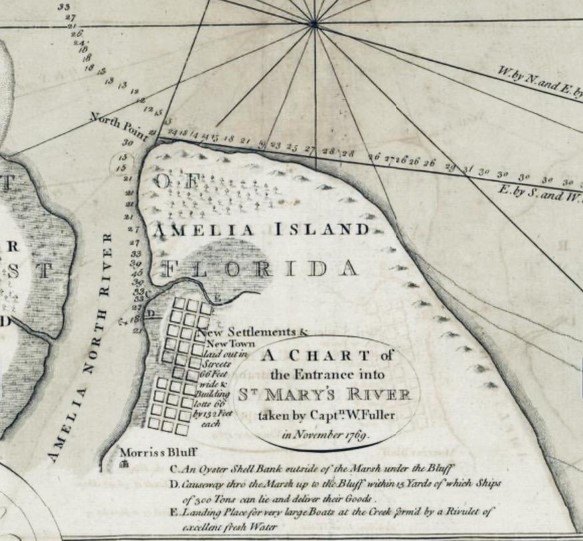
A 1769 map by British Captain William Fuller showed a planned town grid there and "a Causeway thro the Marsh up to the Bluffs within 15 Yards of which Ships of 300 Tons can lie and deliver their Goods," the essay states.
A colony's final chapter
East and West Florida had been British colonies for only 20 years before the 1783 Treaty of Paris returned them to Spain, according to the essay. East Florida had repelled repeated Patriot invasions and grown to 13,000 people. St. Augustine had its own Royalist newspaper, The East-Florida Gazette, and even a theater.
The return to Spanish rule shocked the colony. British residents who would not convert to Catholicism or at least agree not to openly practice Protestant rites had 18 months to sell their property and leave, the essay states.
Wealthier planters tried to transport extended families, enslaved people and building materials to their next destination. Many others sold possessions at steep discounts. An estimated 3,000 people crossed into Georgia instead.
Tonyn spent a considerable amount of the King's treasury to move the remaining refugees first to Amelia Island, then on to other British colonies, Scotland and England, according to the essay. On Nov. 19, 1785, Tonyn descended the bluffs of Amelia Island and boarded the ship Two Sisters, bound for Deptford, England.
An estimated 200 white residents and 400 Black residents remained in East Florida after the evacuation.