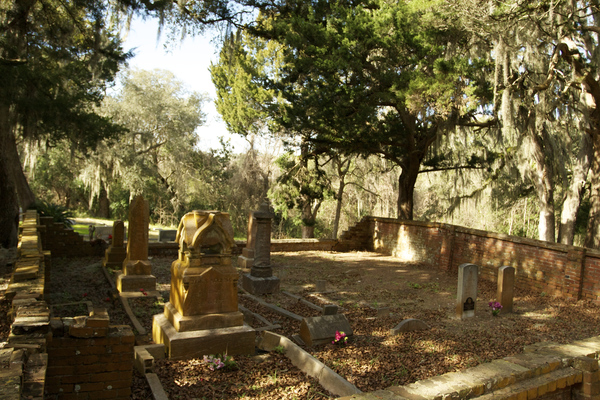
Bosque Bello Cemetery moved one step closer to the National Register of Historic Places in August 2026, when the Florida National Register Review Board voted to forward its nomination to the National Park Service, according to Nassau News Line.
Among the graves that make the cemetery historically significant: two simple stone crosses bearing the date 1877, marking the resting place of Mother Celenie and Sister de Sales. The young French nuns died of yellow fever after nursing Fernandina Beach residents through one of the island's worst yellow fever epidemics. Grateful citizens called them the "Angels of Mercy."
Their story begins at 116 N. Fourth St., where a yellow Folk Victorian cottage known as the Phelan-Verot House still stands in the Historic District.
From Le Puy to Fourth Street
Bishop Augustin Verot of St. Augustine purchased the cottage from Sarah Phelan on Feb. 5, 1875, for what is said to have been $900, according to the Fernandina Observer. Built before 1866, the one-and-a-half-story house is not as grand as many of its neighbors from the island's Golden Age.
Verot had recruited the Sisters of St. Joseph from Le Puy, France, to teach Black children in Florida. Initially two sisters came to Amelia Island; their ranks soon grew to six. They prepared children for their first communion, sold French lace to visitors and gave music and French lessons to Northerners wintering in St. Augustine.
The school they established thrived. In 1882, an academy and convent school opened, originally called St. Joseph's Academy and Convent. It now operates as St. Michael's Academy.
The epidemic
When yellow fever struck in 1877, the disease infected 1,146 of the island's roughly 1,632 residents and killed 94, according to the Amelia Islander.
The cause of yellow fever was not yet understood. Local historian Frank Ofeldt described the community's desperate measures in a 2021 Amelia Islander article: "Field cannons were set up around the city and shot frequently to disperse the air."
The sisters' response was direct. Archives quoted in the Fernandina Observer describe how they "nursed the sick, bathed fever-wracked bodies, fed the hungry and abandoned, sewed lifeless bodies into shrouds and even buried the dead with quick prayers of faith and consolation."
For three weeks, the nuns worked from the small cottage nursing the stricken of every race and faith, day and night, according to the historic marker at the house. Mother Celenie and Sister de Sales did not survive.
Saved from the wrecking ball
By 1993, the cottage was falling down. A tree had grown through its porch. The church that owned the property wanted to expand its parking lot.
The Amelia Island-Fernandina Restoration Foundation fought to save it. The group restored the house, which is now a private residence. A historic marker placed by the foundation and the Florida Department of State stands in front.
The foundation received the John M. Cotner Preservation Champion Award at the 2024 Preservation Awards ceremony, recognizing 50 years of community preservation work. President Buddy Jacobs and the board accepted.
Preservation momentum
The cottage's story connects to a broader push in Fernandina Beach. The City Commission adopted updated Historic District Design Guidelines at its July 21 meeting, the first comprehensive update since 2013.
Residents can visit the sisters' graves during Graveside Chronicles: Stories of Life, Love, and Legacy, a guided walking tour of Bosque Bello Cemetery on Saturday, Oct. 10. The Amelia Island Genealogical Society and the Amelia Island Museum of History are presenting the event. Tickets are $25 and go on sale Tuesday, Sept. 1, available online only through the museum.
.jpg)